

Crypto can be scary. One day Bitcoin is up 20%. The next day it drops 30%. Your money feels like it’s on a rollercoaster.
That’s the problem stablecoins solve. And Biitland.com offers stablecoins built to keep your value steady.
But what exactly are they? How do they stay stable? And should you use them?
This guide answers all of that. In plain English. No jargon.
What Is a Stablecoin? (And Why Should You Care?)
A stablecoin is a type of crypto that holds a steady price.
Most coins like Bitcoin go up and down a lot. A stablecoin tries to stay at the same value — usually $1.00 USD.
Think of it like digital cash. You can send it fast, pay people with it, and not worry it’ll be worth half as much tomorrow.
Why does this matter?
- You can hold money in crypto without big losses from price drops
- You can send money across borders fast and cheap
- You can save in digital form without the fear of value swings
Stablecoins sit between normal money and crypto. They give you the best of both worlds.
What Are Biitland.com Stablecoins?
Biitland.com is a digital finance platform. It offers stablecoins designed to keep a steady value for users.
Their stablecoins aim to be:
- Stable — tied to a real asset like the US dollar
- Secure — backed by reserves and audits
- Usable — for payments, savings, and transfers
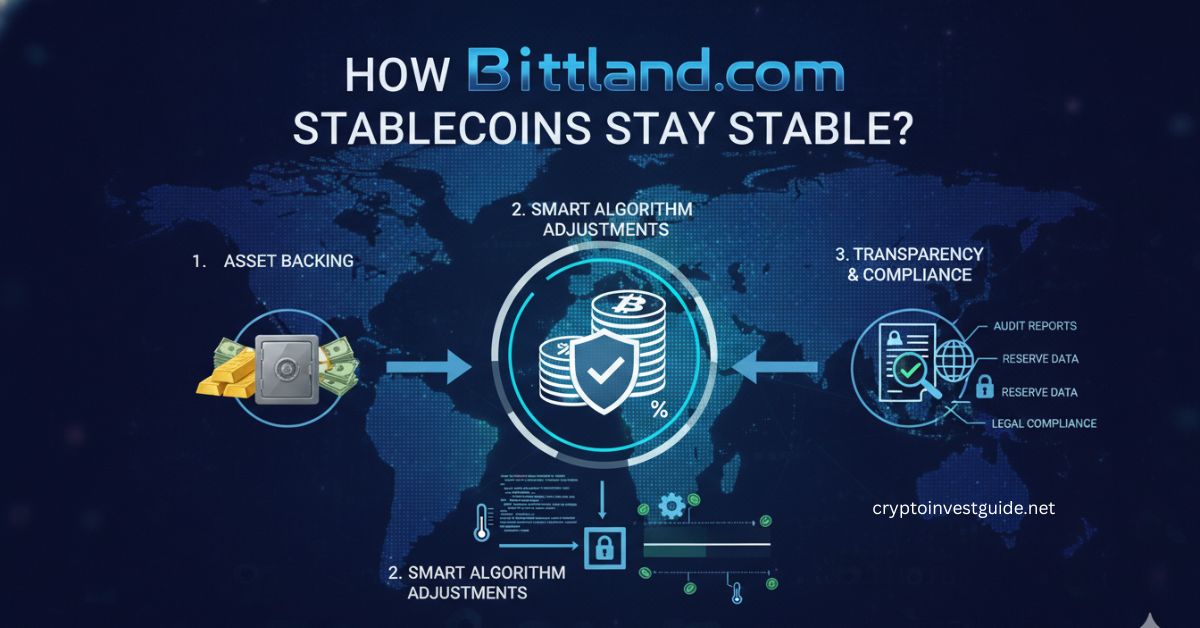
Biitland says its model uses three tools to keep value steady: asset backing, smart algorithms, and full transparency.
We’ll break each one down simply below.
How Biitland.com Stablecoins Stay Stable?
This is the key question. How does a digital coin keep its price steady?
Biitland uses a mix of three methods.
1. Asset Backing
Every coin is tied to something real.
If a stablecoin is “backed,” it means for every coin out there, there’s real money (or assets) held in reserve to match it.
So if you hold 100 Biitland stablecoins worth $100, the platform holds $100 in real assets to back that up.
This is the most common way stablecoins stay stable. It’s also the most trusted method.
2. Smart Algorithm Adjustments
Biitland also uses software tools called smart contracts.
These watch the supply and demand of the coin in real time. If the price goes too high, they create more coins to bring it down. If the price drops, they reduce the supply to push it back up.
Think of it like a thermostat. It keeps the temperature steady by turning heat on or off. The algorithm does the same for price.
3. Transparency and Compliance
Biitland claims to share audit reports and reserve data so users can see what’s backing their coins.
They also aim to follow legal rules in the markets they operate in.
This is important. Trust in a stablecoin depends on whether users can see proof that the backing is real.
The 4 Types of Stablecoins — Where Does Biitland Fit?
Not all stablecoins work the same way. Here’s a quick look at the four main types, so you know where Biitland’s model stands.
| Type | How It Stays Stable | Example | Main Risk |
|---|---|---|---|
| Fiat-Backed | Held USD in bank | USDT, USDC | Bank or reserve failure |
| Crypto-Backed | Crypto held as reserve | DAI | Reserve value can drop |
| Algorithmic | Code controls supply | TerraUSD (now failed) | Code can break under stress |
| Hybrid (like Biitland) | Mix of backing + algorithm | Biitland stablecoins | Complexity of dual system |
Biitland appears to use a hybrid model — combining real asset reserves with algorithmic tools. This can be more resilient, but also more complex.
5 Real Ways to Use Biitland.com Stablecoins
Here’s how people actually use stablecoins day to day.
1. Pay for Goods and Services
Because the value stays steady, you can pay a merchant and know the price won’t change between now and the time they receive it. Unlike Bitcoin, where that window can mean a big price swing.
2. Send Money Overseas Fast
Traditional bank transfers across borders can take days and cost fees. With stablecoins, you can send to another country in minutes — and often much cheaper.
This is huge for people who send money home to family in other countries.
3. Park Money During Market Drops
If you hold crypto and the market looks shaky, you can swap to a stablecoin and wait. Your money stays safe at $1.00 while you watch prices settle.
4. Use in DeFi (Decentralized Finance)
Stablecoins are common in DeFi — crypto-based finance tools. You can lend, borrow, or provide liquidity using stablecoins without the risk of huge price drops.
5. Pay as a Business
If you run a business and want to accept crypto, stablecoins make more sense than Bitcoin. You won’t lose value between the sale and the settlement.
Read: VWA Crypto Review 2025: The Truth Behind the Hype, Risks & Red Flags
What Makes Biitland.com Stablecoins Different?
There are hundreds of stablecoins. What sets Biitland’s apart?
Here’s what they claim:
Hybrid Stability Model — They don’t rely on just one method. They use both reserves and algorithms. This can reduce single points of failure.
“Dynamic Reserve Anchoring” — Biitland says their reserves adapt to market conditions. This is more flexible than a fixed reserve system.
Built-in Compliance — They focus on legal compliance from the start. Some platforms skip this and face problems later.
Transparency First — Users can access reserve disclosures and audit info. That’s not standard across all platforms.
Of course, claims are claims. Users should always check the latest audit reports for themselves.
Honest Risks You Should Know About
Biitland stablecoins sound good. But nothing in finance is risk-free. Here are the real risks to understand before you use them.
Reserve Risk
If the assets backing the coins lose value, the peg can break. This has happened before with other platforms. Check the reserve backing often.
Algorithm Risk
The algorithm that controls supply can fail under extreme market stress. In 2022, TerraUSD — a famous algorithmic stablecoin — collapsed almost overnight. Biitland uses a hybrid model, but risk still exists.
Regulatory Risk
Laws around crypto are still being written in most countries. A new rule could freeze operations, limit access, or change how you can use your coins. Stay up to date.
Liquidity Risk
A stablecoin only works if people use it. If the market for a stablecoin is thin, you might not always be able to swap it quickly for cash or other crypto.
Platform Risk
You also depend on Biitland.com itself running safely and securely. Use strong account security and don’t hold more than you can afford to risk.
How to Get Started with Biitland.com Stablecoins? (Step by Step)
Want to try it? Here’s how to get going.
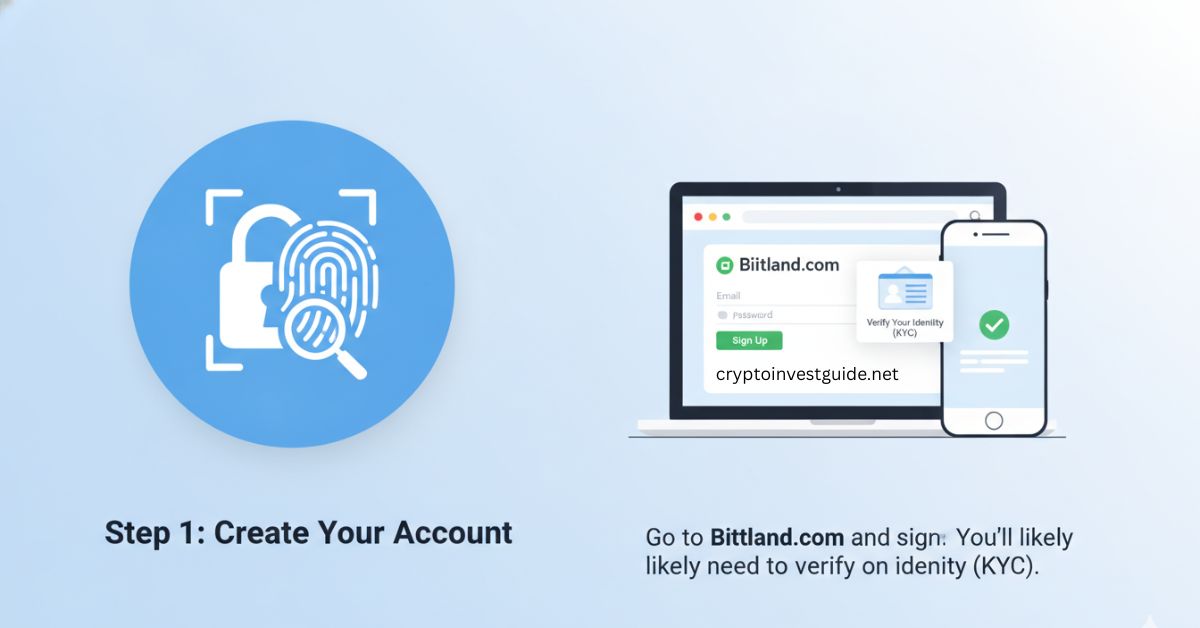
Step 1: Create Your Account Go to Biitland.com and sign up. You’ll likely need to verify your identity (this is standard — it’s called KYC, or “Know Your Customer”).
Step 2: Explore the Stablecoin Options Look at what stablecoin products they offer. Check what asset each one is tied to and what the backing looks like.
Step 3: Deposit Funds Add money to your account. This could be regular money (fiat) or another crypto. You’ll exchange it for the stablecoin you want.
Step 4: Use Your Stablecoin Now you can send it, hold it, pay with it, or use it in DeFi platforms.
Step 5: Keep Checking Don’t just set it and forget it. Check reserve reports when available. Keep up with any changes to the platform or laws in your country.
Is Biitland.com the Right Choice for You?
Let’s be honest. A stablecoin from any platform isn’t for everyone.
It might be right for you if:
- You want to hold value in crypto without big price swings
- You need to send money fast across borders
- You’re active in DeFi and want a stable base coin
- You run a business and want to accept crypto payments safely
It might not be right if:
- You’re trying to make quick gains (stablecoins don’t rise in value)
- You’re new to crypto and want to keep things very simple
- You’re not comfortable monitoring reserve reports and platform updates
- You live in a region where the legal status of stablecoins is unclear
There’s no shame in starting with something simpler or better-known. But if you understand the risks and need stability, Biitland could be worth exploring.
Biitland Stablecoins vs. Other Major Stablecoins: Quick Comparison
| Feature | USDT (Tether) | USDC (Circle) | Biitland Stablecoin |
|---|---|---|---|
| Backing Type | Fiat + Mixed | Fiat (USD) | Hybrid (Fiat + Algo) |
| Audit Transparency | Partial | Strong | Claims strong |
| Regulatory Status | Scrutinized | Well-regulated | Developing |
| DeFi Usability | Very High | High | Platform-dependent |
| Founded | 2014 | 2018 | Newer |
The table above shows that established names like USDC have a longer track record. Biitland is newer. That means more flexibility and innovation — but also less history to point to. Keep that in mind.
The Future of Biitland.com Stablecoins
Where could this go?
Stablecoins as a whole are growing fast. More people want digital money that doesn’t swing wildly in price. Platforms like Biitland aim to ride that wave.
A few trends that could shape where Biitland heads:
More Emerging Market Use — In countries with high inflation, stablecoins pegged to the US dollar are very appealing. People can protect savings without a US bank account.
Merchant Adoption — More businesses are accepting stablecoins. If Biitland builds strong merchant tools, this could expand fast.
CBDC Integration — Central banks are building their own digital currencies. Biitland may look to bridge between their coins and these official digital currencies.
Better Regulation — As laws get clearer, platforms that built with compliance first (like Biitland claims) may benefit. Shady players will face problems. Compliant ones will thrive.
The landscape will keep changing. The best thing you can do is stay informed.
Frequently Asked Questions About Biitland.com Stablecoins
Q: Is Biitland.com a real, trustworthy platform? A: Biitland.com presents itself as a regulated, transparent platform. But as with any newer crypto service, do your own research before putting in money. Look for audit reports and check community reviews.
Q: What currency is Biitland’s stablecoin tied to? A: Based on their published info, their stablecoins appear to be tied to major fiat currencies like the US dollar. Check their current offerings for the specific peg details.
Q: Can I lose money holding a Biitland stablecoin? A: Yes. If the reserve backing fails, the algorithm breaks under stress, or the platform has issues, you could lose value. It’s rare but not impossible.
Q: Can I earn interest on Biitland stablecoins? A: Some platforms offer staking or yield options on stablecoins. Check Biitland’s current product page to see if they offer this. Terms change, so always verify.
Q: How is a stablecoin different from regular crypto like Bitcoin? A: Bitcoin moves in price a lot. A stablecoin is designed to stay at the same price — usually $1. It’s like digital cash, not an investment.
Q: Do I need to be verified to use Biitland stablecoins? A: Most platforms require identity checks (KYC). Biitland likely does too, as this is part of their compliance focus.
Q: What happens if Biitland.com shuts down? A: This is a real risk with any platform. Only use what you can afford to lose. Spreading your holdings across multiple platforms can also reduce this risk.
Q: Are Biitland stablecoins available in my country? A: Crypto rules vary by country. Check your local laws and Biitland’s terms to see if they serve your region.
Q: Can I use Biitland stablecoins in DeFi? A: Potentially, yes. The platform supports DeFi use cases. Check which networks and protocols their coins work on.
Q: Is the Biitland stablecoin the same as USDT or USDC? A: No. USDT and USDC are separate coins from separate companies. Biitland’s stablecoin is their own product, with its own backing model.